Bubble Vocab: Bubble Word Jam
BitEpochWord
4.911.00 Reviews
- Version
- 1.07
- Installs
- 10.00K
- Age Rating
- Everyone
Screenshots

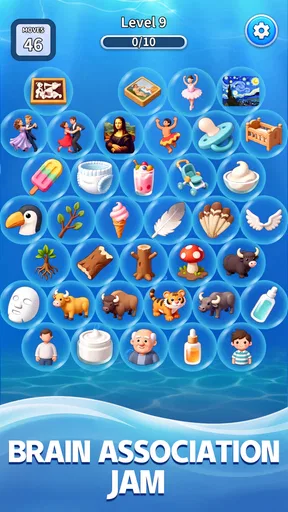
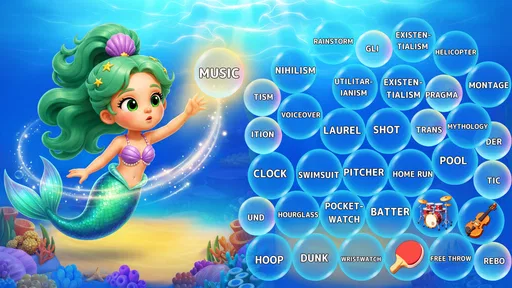
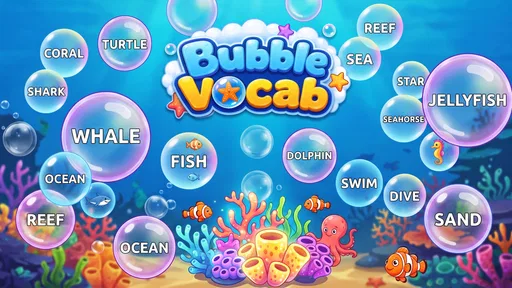
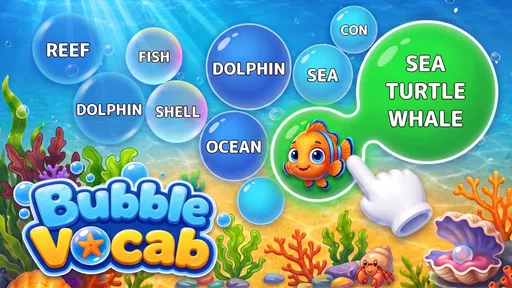
Our Review of Bubble Vocab: Bubble Word Jam
 Analysis by Appyee
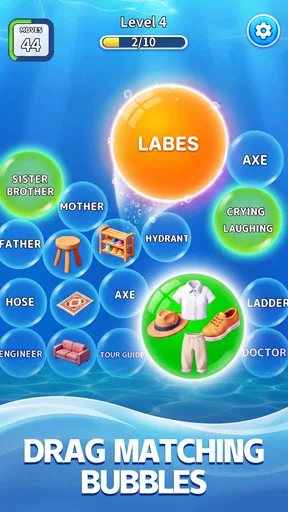
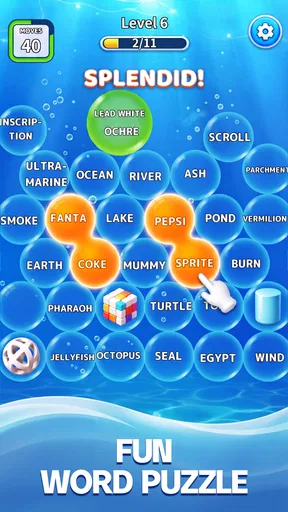
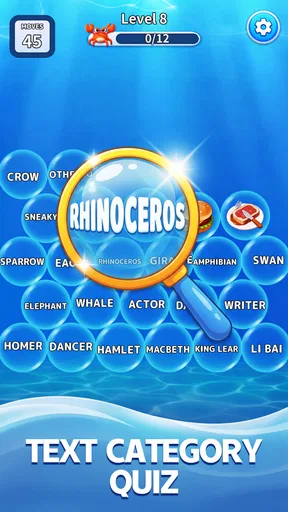
I tested Bubble Vocab: Bubble Word Jam as the sort of small word game that can sit on a shared phone or tablet and be picked up whenever someone has a spare minute. Its basic appeal is easy to understand: letters are presented as bubbles, and the player works toward word combinations while clearing the board. That makes it approachable for a quick turn at home, but it also gives the game enough mental involvement to feel more satisfying than simply tapping through a timer.
What stood out to me is how naturally it fits short, informal sessions. One person can play while waiting for dinner, another can take over later, and nobody needs to remember a complicated story or a large set of controls. At the same time, it is still a word game rather than a passive distraction, so I found myself thinking about possible words before making a move. That balance is the main reason I would recommend trying it, especially if you enjoy vocabulary puzzles but do not want a demanding daily commitment.
How Bubble Vocab works in a shared household
The game comes from BitEpoch and belongs to the word-puzzle category. Its bubble-based presentation gives it a more playful feel than a traditional crossword or a plain anagram list. You are not staring at a static grid of clues; you are interacting with pieces that invite quick decisions. That visual format is useful on a shared device because a new player can understand the general objective by watching someone else for a moment.
In my experience, the best household scenario is a tablet left in a common room. One person can play a short round, hand it over, and explain a useful move without needing to create a separate tutorial for every user. A younger player may focus on spotting familiar short words, while an adult may spend more time searching for a better combination. The game therefore works as a quiet individual activity and as a casual conversation starter.
It is important not to mistake that accessibility for a full family game system. The appeal is turn-taking by agreement, not a built-in household competition. If your family wants profiles, shared scoreboards, or carefully separated progress, a dedicated multiplayer word game would be a better match. Bubble Vocab is more suitable when people are comfortable using the same installation informally and passing the device back and forth.
A realistic example would be a parent using it during a short break while a child watches, then letting the child try the next board. That arrangement can encourage discussion about spelling without making the activity feel like homework. I would still keep the session supervised for very young children, not because the game is difficult to understand, but because shared-device use works best when everyone agrees whose turn it is and when the device should be put away.
What to expect before handing over the device
The game is free and carries an Everyone content rating, which makes it easier to consider for a broadly used household device. That label is helpful for age context, but it should not be treated as a substitute for a parent’s judgment. A child’s reading ability, patience, and comfort with word challenges matter more than the label alone. Some children will enjoy experimenting with letters, while others may find repeated failed attempts frustrating.
I would introduce it by playing alongside the child rather than simply handing over the screen. Showing how to pause and think before popping a bubble helps establish a calmer rhythm. It also avoids turning every move into a race. For older children and adults, the same approach can become a friendly vocabulary challenge: each person suggests a possible word, then the player decides whether it is worth using.
Because the game is installed on a common device, I recommend agreeing on a simple boundary before play. Decide whether the device is for individual turns, a shared challenge, or free use during a particular break. This is not a feature of the game; it is a practical routine that prevents the usual household problem of one person assuming the tablet is available while someone else is already playing.
Another useful habit is to avoid treating a shared game as a record of ability. Word familiarity varies widely between ages and languages, so a younger player may need more time without that meaning the session is going badly. I found the bubble format more welcoming when I treated mistakes as part of exploring possibilities rather than as a test. That mindset matters if several people with different skill levels are using the same screen.
Progress, accounts, and practical coordination
Before several people use the game, I would check whose device account is active and who is expected to continue the current progress. On a shared phone, that may be obvious; on a family tablet, it may not be. The safest assumption is that progress belongs to the installation or device context rather than to a carefully separated personal space. I would not rely on the game as a private archive of each person’s results.
This is one of the main trade-offs compared with a word game built around individual profiles. Bubble Vocab is simple to start because there is less ceremony between opening the game and making a move. The cost of that simplicity is that household coordination has to happen outside the game. If three people want independent records, keep a small note of whose turn or result it is, or choose a game designed around multiple accounts instead.
I also suggest agreeing on whether someone may restart a board or continue another person’s attempt. That sounds minor, but it changes the experience considerably. A player who likes experimentation may want to test unusual combinations, while another may prefer to preserve a carefully planned position. On a shared device, a clear rule such as “finish your turn before passing it on” prevents accidental interference.
For a quick family session, I would use a rotation: one player chooses a move, the next player suggests an alternative, and the device holder makes the final tap. This gives non-players a role without pretending that the game has a cooperative mode. It is especially effective when one person is still learning English vocabulary or needs extra time to recognize possible words.
Age, trust, and the limits of a casual word game
The Everyone rating makes the game a reasonable candidate for mixed-age use, but trust still matters whenever a child uses an adult’s phone. I would avoid leaving the device unlocked with payment or personal applications open, regardless of which game is installed. The rating describes the game’s general audience; it does not turn a shared phone into a childproof environment.
For children who are beginning to read, the game can be useful as a playful prompt for recognizing letters and discussing words. I would keep expectations modest. It is not a replacement for structured reading practice, and I would not use it as the sole way to build vocabulary. Its strength is motivation: the bubbles give a familiar word task a more tactile, game-like presentation.
Older players may appreciate it as a low-pressure mental break, though serious word-game fans could find the format less rich than a full crossword, an anagram competition, or a daily puzzle with a carefully designed clue set. Those alternatives are better when you want deeper deduction, a stronger sense of personal progression, or a more exact challenge. Bubble Vocab is at its best when the goal is to engage your attention quickly rather than study a complex puzzle system.
I would also think about temperament. Someone who dislikes trial and error may prefer a clue-based game where every answer has a clear route. Someone who enjoys scanning letters, spotting patterns, and making a move before overthinking it will probably feel more at home here. In a household, that difference can be useful: the game may appeal to the person who normally avoids word puzzles because it feels more active and less formal.
How it compares with familiar word-game alternatives
Compared with a crossword, Bubble Vocab feels more immediate. A crossword asks you to work through clues and crossings, while this game emphasizes the relationship between visible bubbles and possible words. I prefer the bubble approach when I have only a few minutes or when another person is watching and wants to understand the action. I prefer a crossword when I want layered clues and a longer, more deliberate solving session.
Compared with a plain anagram app, the presentation gives the task more physical presence. Moving through bubbles feels less like reading a list of letters and more like clearing a small puzzle space. That can make it easier to invite a reluctant player to try. The limitation is that visual charm cannot replace depth forever; players who want a large vocabulary challenge or highly varied clue styles may eventually look elsewhere.
Compared with a competitive online word game, it is a better fit for a calm shared device. There is less pressure to respond to another player immediately, and a household can pass the screen around without coordinating a live match. The downside is that people who thrive on head-to-head competition may find the experience too solitary unless they create their own informal contest.
My most useful tip is to slow down after spotting the first obvious word. The easiest combination is not always the most interesting choice, and taking a moment to scan the remaining bubbles can make the board feel more strategic. A second tip is to say possible words aloud when playing with someone else. That turns a private tapping game into a small vocabulary exercise and lets another player contribute without taking control.
A third tip is to use the game as a transition activity rather than an all-evening plan. A short session before a meal, during a waiting period, or between chores suits its accessible format better than expecting it to carry a long family gathering. If the group wants sustained interaction, combine it with a paper word challenge or another game instead of asking this one to provide every kind of entertainment.
Device fit and version context
The current version is 1.07, and the game supports devices running Android 6.0 or later. That makes it relevant for people who keep an older Android phone or tablet in circulation as a household device. I still recommend checking the device’s available space, battery condition, and screen responsiveness before assigning it to children or guests, because those practical details affect a bubble game more than they would affect a simple reading app.
Its audience is still developing: the game has passed 10 thousand installs and holds a 4.9 average from 744 ratings. Those figures suggest a very positive early reception, but I would interpret them as encouragement rather than proof that it suits every word-game player. A small, enthusiastic audience can tell you that the core idea is landing; it does not remove the need to judge whether the format matches your preferred depth and pace.
The release date is Jul 8, 2026, so I would approach it as a relatively new title rather than a long-established household standard. That matters if you are choosing an app for a device that several people will rely on for years. Newer games can feel fresh and focused, but their long-term fit is harder to judge than that of a familiar puzzle with a history of regular use.
Who should install it, and who should skip it
I would recommend Bubble Vocab to someone who wants a free word game that can be understood quickly, played in short bursts, and shared casually with people at home. It is particularly appealing if you like the idea of vocabulary practice without opening a formal learning app. The bubble presentation also gives it a better chance of attracting a child, a casual player, or a relative who normally avoids dense grids.
I would be more cautious if you need separate household profiles, private progress, built-in coordination, or a strong competitive structure. Those needs point toward a multiplayer word title or a profile-based puzzle app. I would also skip it if your main goal is advanced clue solving, extensive language study, or a long-form daily challenge. The game’s value is its approachable interaction, not a promise of academic instruction or tournament-level complexity.
For a shared device, I would install it only after deciding who can use the device and how turns work. That small amount of preparation makes the experience smoother than relying on the game to manage family boundaries for you. Keep the account owner in mind, avoid assuming that everyone has a separate record, and treat the Everyone rating as one part of an age decision rather than the entire decision.
My household verdict
After using it in the way I think it is best suited to, I see Bubble Vocab as a friendly, low-friction word game for informal household play. It gives a shared screen a reason to become interactive without demanding a long explanation, a live opponent, or a serious time commitment. I especially like the way a parent, child, or friend can watch one move and immediately understand the basic rhythm.
Its weaknesses are closely tied to that simplicity. The game does not replace a full crossword, a personal vocabulary course, or a competitive word platform. Shared progress may also require common-sense rules outside the app. Those are not deal-breakers for me, but they should shape your expectations before you put it on a family tablet.
My recommendation is to try it when you want a relaxed, screen-shareable word break rather than a complete family game system. It is free, aimed at Everyone, and accessible on older Android devices, so the barrier to testing the idea is low. If the people in your home enjoy spotting words together and can agree on turns, it has a good chance of becoming a pleasant little routine. If they need private accounts, deep puzzles, or constant competition, another category of word game will serve them better.
Verdict
Strengths of Bubble Vocab: Bubble Word Jam
- Short word puzzles are ideal for quick breaks.
- Colorful visuals make the game inviting for younger players.
- Gradual difficulty helps beginners build confidence.
- Simple controls are easy to learn without instructions.
- Vocabulary challenges can support spelling and word recognition.
Limitations of Bubble Vocab: Bubble Word Jam
- Some puzzles may feel repetitive after extended play.
- Ads can interrupt the flow between levels.
- Advanced players may find the vocabulary too easy.
- Progress may depend on completing a limited set of puzzles.
- Offline availability may vary depending on the game version.
Other Releases by BitEpoch
View All
Word Card Sort: Solitaire
Word4.9
Similar Picks in This Category
View All
Word Search - Word Puzzle Game
Bluetile4.8

Word Search Quest - Puzzles
Blackout Lab4.8

CodyCross: Crossword Puzzles
Fanatee, Inc.4.7

Words of Wonders: Crossword
Fugo Games4.9

Wordscapes: Word puzzle game
PeopleFun4.7

Word Search Explorer
PlaySimple Games4.9
Frequently Asked Questions
What is Bubble Vocab: Bubble Word Jam, and how does the gameplay work?
Bubble Vocab: Bubble Word Jam is a casual word puzzle game that combines vocabulary practice with bubble-popping mechanics. You generally create or connect letters to form valid words, then use those words to clear bubbles and complete each level. The game is designed to be easy to start, while progressively introducing more challenging boards, limited moves, objectives, and word combinations.
Is Bubble Vocab: Bubble Word Jam suitable for improving English vocabulary?
The game can be useful for practicing English spelling, recognizing common words, and expanding vocabulary through repeated word-building challenges. However, it should be viewed as a light learning aid rather than a complete language course. Difficulty and vocabulary may vary between levels, so beginners can enjoy the simple puzzles while more advanced players may appreciate the focus on speed, accuracy, and discovering less obvious words.
Can I play Bubble Vocab: Bubble Word Jam offline?
Some core puzzle features may remain available without a continuous internet connection, which is convenient when traveling or playing in areas with limited service. Nevertheless, online access may be required for advertisements, cloud synchronization, special events, updates, leaderboards, or in-app purchases. Availability can also depend on the version installed and the device platform, so it is best to test offline play after installation.
Does Bubble Vocab: Bubble Word Jam contain ads or in-app purchases?
Like many free-to-download puzzle games, Bubble Vocab: Bubble Word Jam may include advertising and optional in-app purchases. Ads can potentially appear between levels or when players request extra rewards, hints, or additional attempts. Purchases are generally intended to speed up progress or provide helpful resources, but they should not be necessary to understand the basic gameplay. Check the store listing and payment settings before downloading.
Is Bubble Vocab: Bubble Word Jam free to download, and what devices support it?
Bubble Vocab: Bubble Word Jam is typically offered as a free download, although the exact pricing model, supported operating systems, and storage requirements may change with future updates. Before installing, confirm that your Android or iOS version meets the developer’s requirements and that enough free space is available. It is also worth reviewing recent user ratings, permissions, and update information in the official store.
Play our best games!


